


Having inventory on the way is not the same as being ready to sell.
A brand can have cartons at a warehouse and shipments heading to Amazon, yet still run short when shoppers arrive. The problem is not always how much stock the business owns. It is whether the right units can support demand at the right time.
Amazon FBA inventory management for the holiday season means connecting available stock, demand forecasts, inbound timing, backup inventory, and reorder points. Those five checks should inform the same plan before advertising or promotions increase demand.
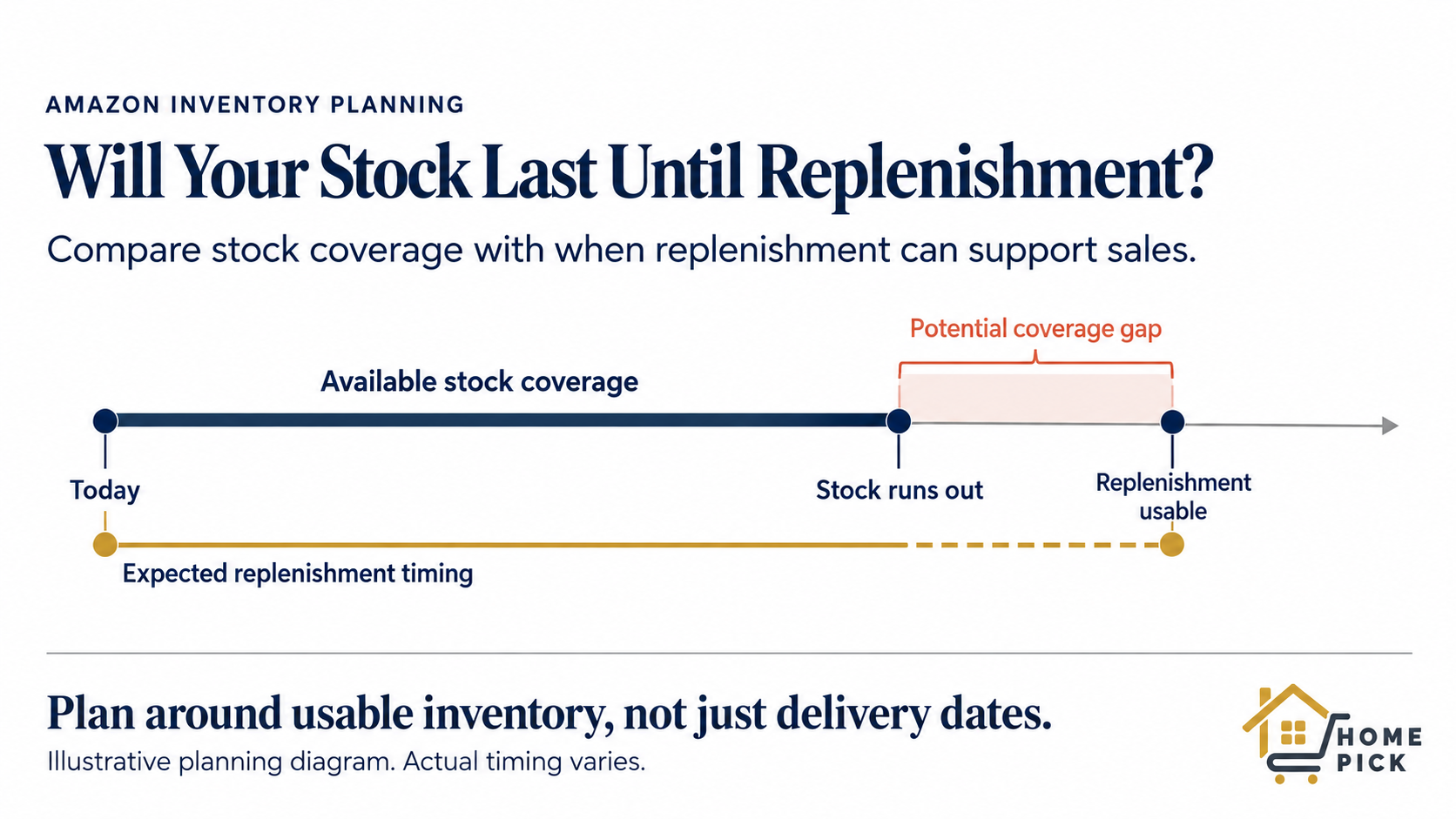
The practical question is simple: Will each priority SKU have enough usable inventory until the next replenishment can support sales?
Five Inventory Checks Before Demand Increases
Review inventory at SKU level. A healthy total across the catalog can hide a shortage in the products receiving the most traffic.
1. Start With Stock That Can Support Sales
Separate available units from inbound shipments, committed stock, and inventory requiring investigation. Avoid treating every unit in your inventory report as equally usable.
For a basic estimate, divide available units by expected daily sales. The result is days of coverage, not a guarantee. If demand accelerates, coverage shrinks.
Prioritize products with strong sales, planned promotions, or limited replenishment flexibility. Excess stock in a slow-selling SKU cannot compensate for a best seller running out.
2. Forecast Demand Beyond Last Month’s Average
Recent sales provide a starting point, but holiday inventory planning needs context. Consider seasonality, planned discounts, advertising changes, and differences between this year’s offer and last year’s. Historical sales may also understate demand if a product was previously unavailable.
Build a baseline and a higher-demand scenario. Their purpose is not to predict sales perfectly, but to reveal when inventory decisions need to change.
Illustrative example: A SKU has 600 available units. At 20 units per day, coverage is 30 days. At 30 units per day, it falls to 20 days. If replenishment becomes usable in 25 days, the higher-demand scenario exposes a five-day gap.
That gap should be discussed before increasing advertising, not after stock becomes critical.
3. Plan Around Availability, Not Just Delivery
A carrier delivery date is one milestone, not the entire inbound plan.
Amazon distinguishes delivered, checked-in, and receiving stages. Its guidance notes that received units can be available for sale while awaiting transfer before immediate shipping. High-volume periods can also lengthen movement between stages. See Amazon’s guide to tracking FBA shipments.
Check shipment progress alongside actual offer availability and customer delivery estimates. Work backward from when stock is needed, accounting for preparation, transit, receiving, and uncertainty. Assign someone to flag delays and update the replenishment forecast.
4. Keep Backup Stock With a Release Plan
Backup stock is useful only if it can reach the selling channel in time.
Identify where it sits, whether it is committed elsewhere, who can authorize release, and how long preparation and transfer take. Keep this separate from inventory marked as reserved within Amazon’s systems.
More backup stock ties up cash and may create storage or expiry exposure. Less backup reduces that commitment but leaves less protection against demand spikes or supply delays. Choose the buffer according to demand variability, replenishment reliability, shelf life, and the SKU’s commercial importance.
5. Set Reorder Points Before Coverage Becomes Critical
A practical starting formula is:
Reorder point = expected demand during replenishment lead time + safety stock.
Compare that threshold with a consistently defined inventory position: usable stock plus confirmed replenishment orders, minus outstanding commitments. Do not subtract commitments twice if they are already excluded from usable stock.
Timing still matters. An order arriving after a projected stockout cannot solve the earlier gap, even if total inventory position looks sufficient. Review reorder triggers whenever expected demand or replenishment lead times change.
Turn the Checklist Into a SKU-Level Review
Create one row for each priority SKU. Record available units, forecast daily demand, days of coverage, the next replenishment quantity, its expected usable date, and the person responsible for the next action.
Then compare the projected stock depletion date with the replenishment date. If coverage ends first, identify an action: release backup inventory, investigate shipment progress, adjust a promotion, or reconsider additional advertising.
Give each action an owner and a review date. Revisit the sheet regularly, with more frequent checks when coverage tightens, shipments slip, or demand changes. The point is not another report; it is a clear decision before the gap becomes a stockout.
Connect Replenishment Decisions With Advertising
Before increasing spend, check whether the promoted SKUs have enough coverage under the updated forecast.
Tight stock does not automatically mean pausing advertising. Depending on margin and replenishment confidence, the response could be a smaller increase, a delayed promotion, or a shift toward better-supported products.
For broader channel preparation, read What a Healthy Amazon Channel Looks Like Before Peak Season. This inventory review addresses a narrower question: whether individual SKUs can support the demand being planned.
Home Pick’s Amazon channel management services connect inventory coordination with advertising and channel operations, helping teams align replenishment decisions with growth plans.
Frequently Asked Questions
What is Amazon FBA inventory management?
It is the planning and monitoring of stock supplied through Fulfillment by Amazon, including availability, demand forecasting, inbound shipments, and replenishment decisions.
How much inventory should I send to Amazon for the holiday season?
Base the quantity on expected demand, replenishment lead time, existing stock, and an appropriate buffer. Consider storage constraints, cash commitments, and shelf life rather than applying one coverage target to every SKU.
Does delivered inventory mean it is ready for immediate shipping?
No. Delivery, receiving, sale availability, and immediate shipping are different considerations. Check shipment status, inventory availability, and customer-facing delivery estimates before treating incoming units as ready.
How do I calculate an Amazon reorder point?
Estimate demand over the full replenishment lead time and add safety stock. Compare that threshold with inventory position, then check whether incoming units will arrive before existing coverage runs out.
Should advertising increase before replenishment arrives?
Only when current coverage and replenishment confidence support the additional demand. Review the forecast, margin, and delivery promise first. An incoming shipment alone is not sufficient justification for increasing spend.
Build a Holiday Inventory Plan That Supports Growth
Your inventory, promotion, and advertising plans should agree before demand rises. Start with priority SKUs, identify coverage gaps, and assign the next replenishment decision to a clear owner.


