


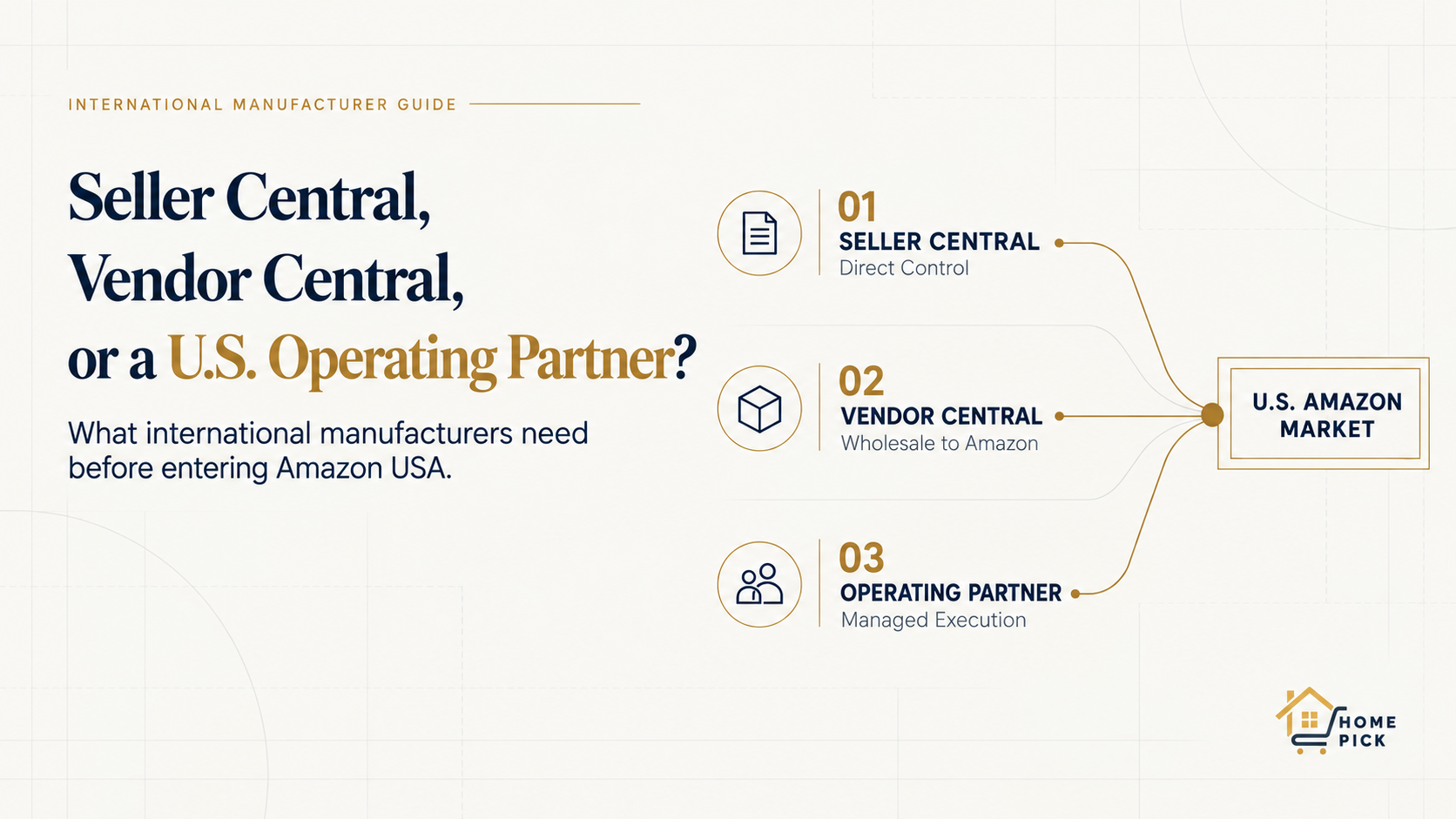
What International Manufacturers Need Before Entering Amazon USA
The right question is not only, “Can we sell on Amazon USA?” It is, “What structure gives this brand the strongest path to controlled, sustainable growth?”
Start With the U.S. Opportunity and Channel Economics
International success is valuable evidence, but it does not guarantee the same U.S. result. Customer expectations, search behavior, competition, pricing, fees, promotions, and category requirements may differ.
Manufacturers should assess demand, competing products, review expectations, pricing, and differentiation. Their financial model should include manufacturing, freight, duties, storage, Amazon fees, returns, advertising, promotions, and partner margins.
This calculation should focus on contribution margin, not revenue alone. A product can sell well while creating weak economics once the full cost of operating the channel is considered.
Our broader market-entry guide for established international brands explains how to validate demand and prepare an initial product portfolio before committing significant inventory.
Seller Central, Vendor Central, or an Operating Partner?
The operating model determines who controls the account, inventory, pricing, revenue flow, and daily execution.
Seller Central
Seller Central allows a business to offer products as a third-party seller. The brand can retain control over its account, pricing, inventory, listings, advertising, and commercial decisions.
This flexibility creates operational responsibility. Someone must consistently manage catalog issues, inventory, advertising, customer feedback, reporting, and account health. A manufacturer can build that capability internally or appoint an experienced operating team.
Vendor Central
Vendor Central is a first-party wholesale relationship in which the manufacturer sells inventory to Amazon and Amazon distributes the products. According to Amazon’s official explanation of Seller Central and Vendor Central, Vendor Central is invitation-only.
This model changes control, economics, forecasting, and the commercial relationship. Manufacturers should not build a strategy around Vendor Central unless an invitation and viable terms exist.
U.S. Operating or Wholesale Partner
A manufacturer may also work with a U.S. partner that purchases inventory, manages distribution, or operates the Amazon channel. This is a commercial partnership rather than a separate Amazon program.
This can reduce the manufacturer’s infrastructure burden, but responsibilities must be explicit. The agreement should define inventory ownership, pricing, listing control, Brand Registry permissions, advertising, reporting, returns, brand protection, and growth expectations.
There is no universally superior model. The right choice depends on margins, desired control, internal capacity, inventory strategy, and how much accountability the manufacturer expects from its partner.
Prepare the Account and Protect the Brand
Amazon provides Global Selling resources for businesses based outside the United States that want to reach U.S. customers. Registration and marketplace access, however, are only part of the setup.
The brand must establish the appropriate legal, banking, tax, import, and compliance structure. Requirements vary, so manufacturers should confirm obligations with qualified legal, tax, customs, and compliance advisers.
Brand Registry should also be reviewed early. Eligible brands generally need an accepted pending or registered trademark and branding permanently affixed to products or packaging. The trademark owner should retain appropriate control and carefully assign permissions to employees, agencies, distributors, or operating partners.
Build the Inventory and Logistics System
International manufacturers face complex replenishment cycles. Production, freight, customs, receiving, storage, FBA preparation, and Amazon check-in times all affect availability.
Before launch, the operating plan should answer:
- Who will act as importer of record?
- Where will reserve inventory be stored?
- Who prepares and sends inventory to FBA?
- How will lead times and buffer stock be calculated?
- Who monitors sell-through and creates replenishment orders?
- How will returns, damaged units, and stranded inventory be handled?
The goal is to support demand without unnecessary storage exposure or excessive capital tied up in inventory.
Establish Retail Readiness Before Advertising
Listings from another marketplace should not simply be copied into Amazon USA. U.S. keyword behavior, customer expectations, measurements, terminology, product claims, imagery, and competitive standards must be reviewed.
Retail readiness includes accurate data, localized copy, strong images, A+ Content where available, competitive pricing, consistent buyability, and clear differentiation. Category approvals and compliance requirements should be resolved before inventory arrives.
Advertising cannot compensate for a weak retail foundation. It can generate traffic, but poor positioning, incomplete content, pricing problems, or unavailable inventory will limit conversion and waste launch investment.
Home Pick brings these areas together through its Amazon services and full-channel operating model, including strategy, retail readiness, inventory coordination, advertising, reporting, account health, and brand protection.
Define Ownership and the Operating Cadence
The final requirement is clear ownership. International expansion becomes difficult when the manufacturer, distributor, agency, logistics provider, and internal team each manage a separate part of the channel without one accountable operator.
Leadership should define who owns pricing, inventory decisions, listing changes, advertising budgets, account issues, and performance reporting. Weekly operating reviews should identify actions and risks. Monthly reviews should connect revenue, margin, advertising, inventory, and competitive movement to commercial decisions.
Reporting should not end with a dashboard. It should explain what changed, why it matters, and what the team will do next.
Build the Operating Model Before the Launch
Entering Amazon USA is not only an account-setup project. It is a decision about economics, infrastructure, control, and execution.
Manufacturers that define these areas before launch are better positioned to protect their brand, manage inventory, and make informed growth decisions. The strongest model is the one that matches the brand’s financial objectives, internal capabilities, and desired level of channel ownership.
Planning to introduce an established international brand to the United States? Schedule an Amazon discovery call to evaluate the opportunity and determine the right operating structure.
Frequently Asked Questions
1. Can a foreign manufacturer sell on Amazon USA?
Yes. Amazon supports businesses based outside the United States that want to sell to U.S. customers. The manufacturer must still satisfy Amazon’s registration requirements and address applicable tax, import, product compliance, banking, and logistics obligations.
2. Does an international manufacturer need a U.S. company?
Not in every situation. The appropriate structure depends on account ownership, tax treatment, banking, inventory imports, product compliance, and the operating model selected. Legal and tax professionals should review the manufacturer’s specific circumstances.
3. What is the difference between Seller Central and Vendor Central?
Seller Central is used by third-party sellers that offer products directly to Amazon customers. Vendor Central is an invitation-only first-party relationship in which a manufacturer or supplier sells inventory wholesale to Amazon.
4. Should a manufacturer use a distributor or operate its own Amazon account?
It depends on control, margins, internal capacity, and inventory strategy. Operating an owned account offers greater direct control but requires ongoing expertise. A distributor or wholesale partner can assume more responsibility, provided pricing, permissions, reporting, and brand protection are clearly defined.
5. What should be ready before inventory is sent to the United States?
The manufacturer should validate demand and economics, select an operating model, prepare the account and listings, confirm compliance requirements, establish logistics and replenishment processes, and assign clear ownership for daily execution and reporting.


